 Honeymoons & celebration journeys
Plan · Weather
Which coast, which month
Six coasts, twelve months, one mark per month. Every row is built from the official seasonal description and the average monthly rainfall, and every row says where those came from. Use it to choose the beach first and build the rest of the trip around it.
The calendar
3 = settled beach weather · 2 = usable, with a cooler, windier or wetter side · 1 = rainy or storm season, or strong winds in the official description. Marks are for beach and boat days, not for sightseeing.
Read down a column and you can see the problem every celebration trip has to solve: there is no month when all six coasts score 3. In March five of them do. In July only Nha Trang and the Da Nang coast do. In October none does.
How the marks are set
Each month on each coast gets its mark from two inputs. The first is the seasonal description published by Vietnam's national tourism authority, or for Cambodia, Britannica's description of the two monsoons. The second is the average monthly rainfall in millimetres, from a climate data aggregator; it is not a meteorological agency, and we say so in the sources.
- 3 — average rainfall at or below about 100 mm, and an official description of sunny, clear or calm weather.
- 2 — rainfall between about 100 and 250 mm, or a dry month that the official description calls cool, misty, windy or transitional.
- 1 — rainfall above about 250 mm, or an official description that says stormy, long rains or strong winds.
Where the two inputs disagree we take the more cautious mark, and say so in the row notes below. The marks describe averages. A dry month can still have a storm, and a wet month can still give you three blue days in a row.
Row by row, with sources
| Coast | Driest months (avg rain) | Wettest months (avg rain) | Official season wording | Source for this row |
|---|---|---|---|---|
| North: Halong Bay, Lan Ha, Cat Ba | Dec – Feb (20 – 30 mm, Hai Phong) | Aug (360 mm), Sep (255 mm) | Dec – Mar cool, misty; Apr – Jun sunny; Jun – Aug stormy; Sep – Nov mixed | VNAT weather page; Climates to Travel |
| Centre: Da Nang & Hoi An | Mar (20 mm), Feb (25 mm) | Oct (650 mm), Nov (430 mm) | Hoi An: rain and storms Oct – Jan; Da Nang: calm clear sea Jun – Aug, long rains Nov – Feb | VNAT Da Nang; VNAT Hoi An; Climates to Travel |
| Centre: Nha Trang | Feb (15 mm), Mar (30 mm) | Nov (330 mm), Oct (300 mm) | Rainy Sep – Dec, less prone to heavy storms than coasts further north | VNAT Nha Trang; Climates to Travel |
| South: Phu Quoc | Feb (30 mm), Jan (35 mm) | Aug (545 mm), Sep (475 mm) | Stormy Jul – Sep; dry and coolest Oct – Mar | VNAT Phu Quoc; Climates to Travel, Phu Quoc |
| South: Con Dao | Jan, Mar (10 mm) | Oct (350 mm), Sep (315 mm) | Strong winds Dec – Jan; turtle hatching mid-Aug to early Dec | VNAT Con Dao; Climates to Travel |
| Cambodia: Kep & Koh Rong | Jan (about 10 mm, Kampot) | Jul – Aug (over 300 mm, Kampot) | Southwest monsoon mid-May – early Oct, heavy rain; northeast monsoon early Nov – mid-Mar, drier | Britannica, Cambodia climate; Climates to Travel, Cambodia |
Notes on individual rows
- North. January and February are dry but cool, with the sea around 21°C; they score 2, not 3, because the official description is cool, misty and cloudy. September scores 1 on rainfall and because it falls in the northern storm peak. Storms have stopped all sailings in the bay in July 2024 and July 2025.
- Da Nang and Hoi An. January has only 85 mm on average but sits inside both official rainy descriptions, so it scores 1. August edges over 100 mm and scores 2.
- Nha Trang. Scores 3 for eight months running, the longest settled stretch of any coast here. The tourism authority notes it gets the most sunshine in the country.
- Phu Quoc. The tourism authority starts the dry season in October, but the October rainfall average is still about 385 mm; we mark it 1.
- Con Dao. January is nearly dry but officially windy, so it scores 1 for boats and swimming. February to April is the island's window.
- Kep and Koh Rong. No station of their own in our sources; we use Kampot, 15 km from Kep, and the national monsoon description. Island crossings to Koh Rong depend on the sea on the day.
Sources: Vietnam National Authority of Tourism — weather and climate; Climates to Travel — Vietnam rainfall averages (climate aggregator); Climates to Travel — Phu Quoc rainfall averages (climate aggregator); Climates to Travel — Cambodia rainfall averages (climate aggregator); Encyclopaedia Britannica — Cambodia: climate; Vietnam National Authority of Tourism — Con Dao; Vietnam National Authority of Tourism — Nha Trang · checked .
Month by month: where we would put the beach
| Month | Beach we would choose | Second choice | Avoid for beach days |
|---|---|---|---|
| January | Phu Quoc, Kep | Nha Trang | Da Nang & Hoi An, Con Dao (wind) |
| February | Phu Quoc, Con Dao, Kep | Nha Trang | Halong for swimming (cool) |
| March | Phu Quoc, Con Dao, Da Nang & Hoi An | Nha Trang, Kep | — |
| April | Da Nang & Hoi An, Nha Trang, Con Dao | Halong, Phu Quoc (rain starting) | — |
| May | Da Nang & Hoi An, Nha Trang | Halong | Phu Quoc |
| June | Da Nang & Hoi An, Nha Trang | — | Halong (storms), Phu Quoc, Con Dao, Cambodian coast |
| July | Da Nang & Hoi An, Nha Trang | — | Halong (storms), Phu Quoc (stormy), Cambodian coast |
| August | Nha Trang | Da Nang & Hoi An | Halong, Phu Quoc, Con Dao, Cambodian coast |
| September | — | Nha Trang (rains starting) | Halong, Da Nang & Hoi An, Phu Quoc, Con Dao |
| October | — | Halong (settling) | Central coast, Phu Quoc, Con Dao |
| November | Phu Quoc (improving), Halong for the boat night | Kep, Con Dao | Da Nang & Hoi An, Nha Trang |
| December | Phu Quoc, Kep | Nha Trang (still rainy) | Da Nang & Hoi An, Con Dao (wind) |
September and October are the hard months: every coast here is wet, windy or both. For a celebration in those months we suggest a route weighted to culture, with a short beach end on the least-bad coast, or moving the dates if you can.
How to split 10 to 16 days once the beach is chosen
With the beach fixed, the culture half is built backwards from it, using places whose own dry season overlaps. The pairings that work:
| Beach end | Culture stops that share its season | Our route |
|---|---|---|
| Phu Quoc (Dec – Mar) | Siem Reap and Angkor; Luang Prabang; Hanoi and a boat night (cool, misty) | Angkor & southern islands, Laos & Vietnam |
| Phu Quoc (Feb – Mar) | Hanoi, Halong, Hoi An | 14-day honeymoon |
| Da Nang & Hoi An coast (Mar – Aug) | Hue and Hoi An; Halong in April and May | 10-day anniversary |
| Nha Trang (Jan – Aug) | Hoi An and Hue (Mar – Aug) | Built on request |
Then the split itself. Ten days: five nights of culture, four on the beach. Fourteen days: seven and six. Sixteen days: eight and seven, without adding a fourth city. The beach goes last and never gets fewer than four nights; culture stops get three nights where possible. More on this on the tours page.
Culture stops have seasons too
| Place | Comfortable months | Source |
|---|---|---|
| Hanoi | September – November, clear and cool; December – March cool and misty | VNAT weather page |
| Hue | March – August, warm to hot and sunny; rainy September – February | VNAT weather page |
| Hoi An old town | February – August | VNAT weather page and Hoi An page |
| Siem Reap (Angkor) | November – mid-March, the drier monsoon | Britannica; Climates to Travel |
| Luang Prabang | November – February; nights near 15°C | Climates to Travel, Laos |
Destinations in detail: Halong Bay, Hoi An, Phu Quoc, Siem Reap.
Common questions
Questions travellers ask most
Is there a month when every beach in Vietnam is good?
No. The north, the centre and the south have different rainy seasons. March and April come closest, with most coasts settled; September and October are the hardest months everywhere.
Where can we go to the beach in December?
Phu Quoc or the Cambodian coast at Kep. The central coast is in its rainy season and Con Dao has strong winds in December and January.
Where can we go to the beach in July?
The central coast around Da Nang and Hoi An, or Nha Trang. Phu Quoc and Halong Bay are in their stormy months.
How reliable are these marks?
They are built from averages and official seasonal descriptions, not forecasts. They tell you the odds for a month, not the weather on your dates. Check the forecast in the week before you travel.
Related
Read next
Tours
Tours
Four private celebration routes of 10 to 14 days, with the months that suit each one.
View journey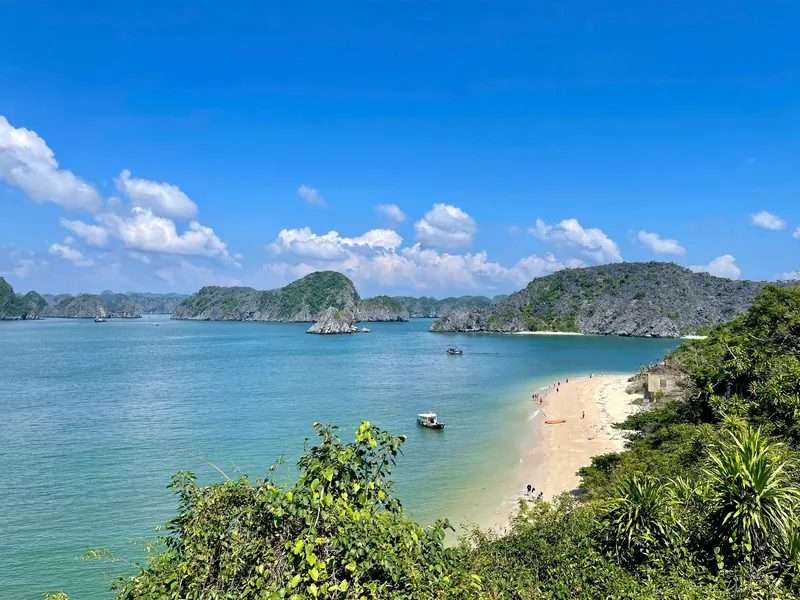
Example itinerary — fully customizable
Honeymoon 14 days
Hanoi, an overnight boat, Hoi An and six nights on Phu Quoc — the classic north-to-south honeymoon, timed for February to May.
View journey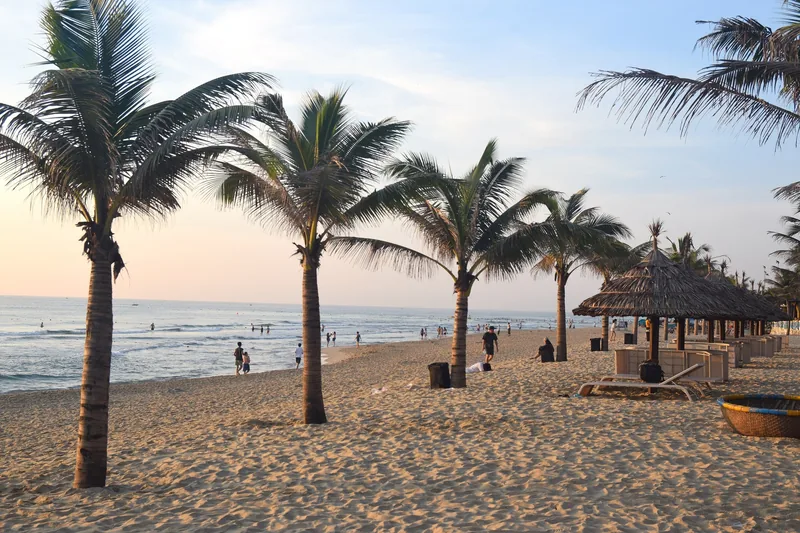
Example itinerary — fully customizable
Anniversary 10 days
Hue, Hoi An and four beach nights on the central coast — ten days with no internal flights, for March to August.
View journey
Example itinerary — fully customizable
Angkor & islands 12 days
Temples first, then a week by the sea on two coasts — the route for a winter celebration, December to March.
View journey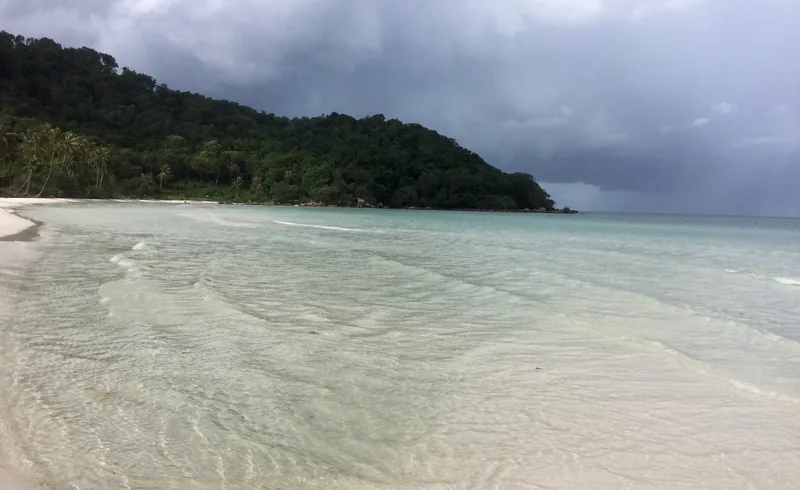
Destinations · Southern Vietnam
Phu Quoc
The island at the end of most of our routes: the west coast sunsets, the southern islands by private boat, and its dry season.
View journey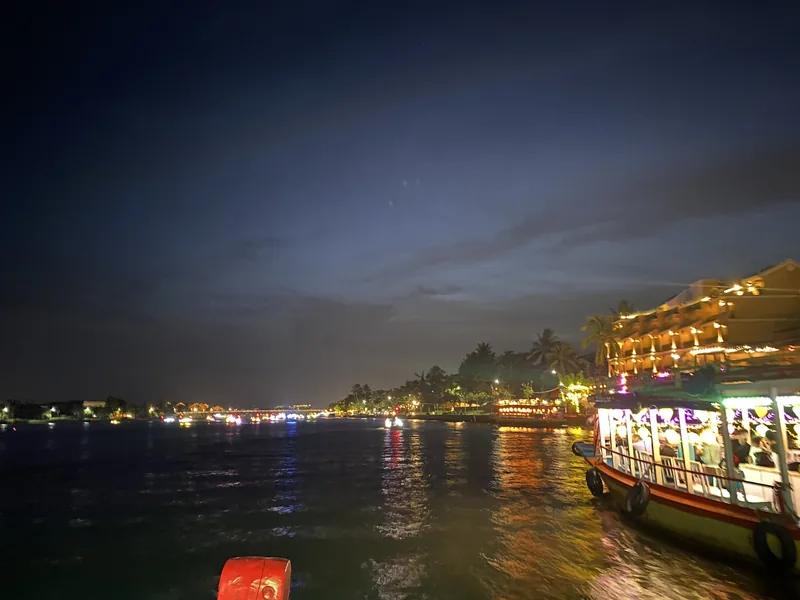
Destinations
Destinations
Halong Bay, Hoi An, Phu Quoc and Siem Reap: what each is like and when it suits a celebration trip.
View journey
Start planning
Tell us the occasion, the month and who is coming
A month, the number of travellers and the occasion are enough to start. You get a draft route and an itemised quote, not a brochure.